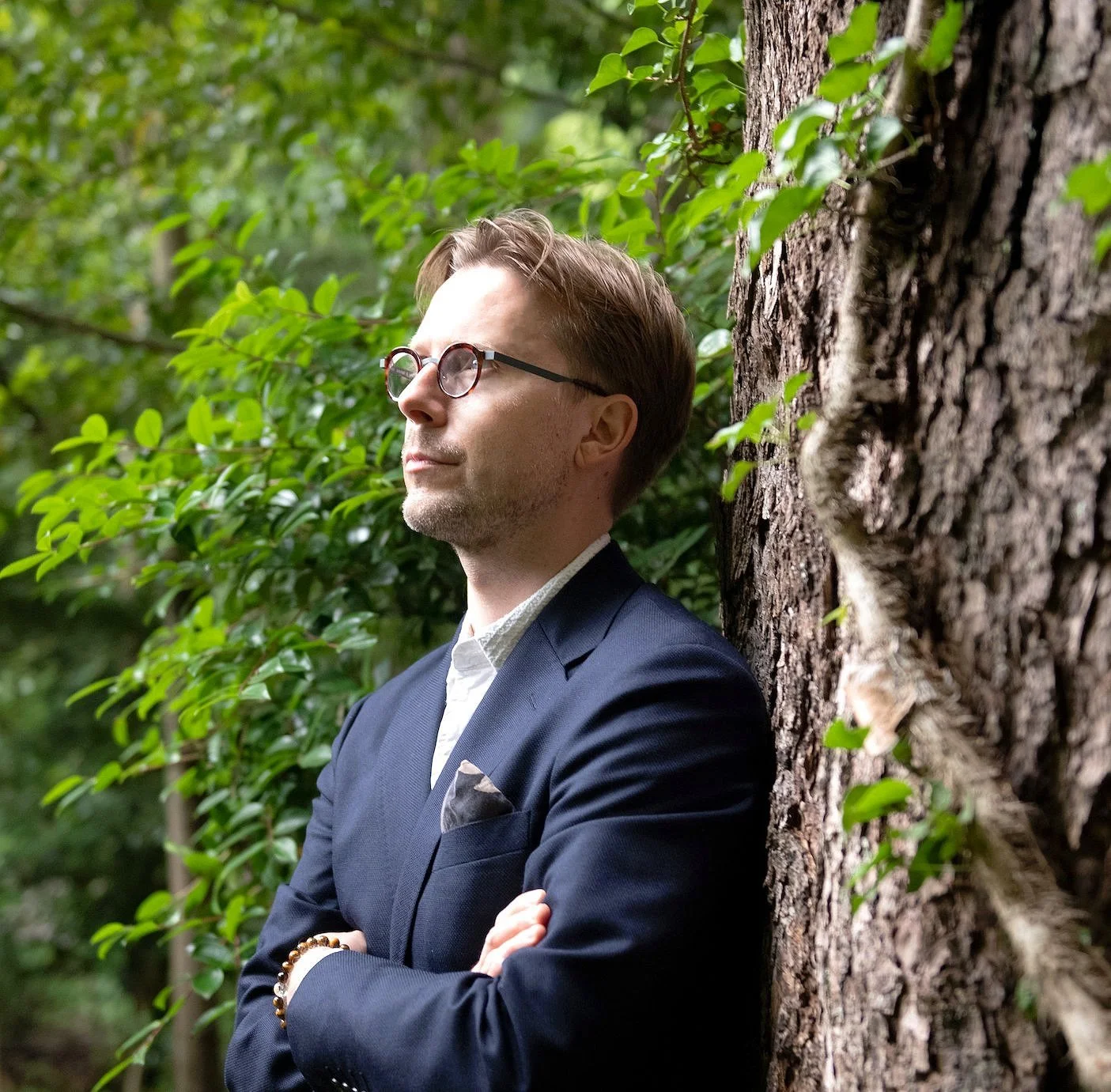
Tuukka Toivonen, PhD (Oxford)
Essayist | Speaker | Founding Director, Becoming Regenerative Lab (LUL, RCA, UCL)
How can one cultivate a uniquely integrative way of being - rooted in body-mind oneness - in these times of disintegration?
Integrating my extensive academic experience and diverse personal interests, I am currently focused on exploring integrative, embodied ways of being through writing, direct experience, dialogues and retreats.
I regularly publish accessible essays on Rick Rubin’s Tetragrammaton, my own Total Being Substack and other platforms, drawing heavily on Asian philosophy, Japanese embodied traditions, ecological thinking as well as contemporary movement arts and music.
I feel strongly about deeply engaging with embodied experience - including through practices such as aikido, reiki, meditation and regenerative design work - and publicly articulating the value of the myriad invisible-yet-crucial processes that constitute such holistic experience, so that human creativity and modes of being can be decisively and wisely prioritised as AI permeates and degrades many aspects of life.
Following two years of ideation, preparation and fund-raising, I leveraged my distinctive scholarly background to lead the London-based Becoming Regenerative Lab across Loughborough University London, the Royal College of Art and University College London. “B-Regen” is an innovative £1M UKRI-funded initiative that researches how regenerative designs and enterprises emerge.
My emerging embodiment and AI-focused academic work has been accepted for presentation at top global consciousness studies, philosophy of mind and psychedelics research conferences.
Prior research I’ve led has been published in outlets such as the Academy of Management Journal and the Stanford Social Innovation Review as well as by Routledge.
I’ve held full-time academic appointments (fellowships, lectureships, senior lectureships, readerships) at both science and art-focused universities such as Oxford, UCL, Central Saint Martins, Kyoto University and Tokyo University, while carrying out consultancy work for clients such as British Council and Sitra. I’ve also worked as a Senior Associate at the ethics consultancy Principia Advisory.
You can find a selection of my publications here and via Google Scholar.